ENT Specialist

Living with Sleep Apnea in Singapore – An ENT Specialist’s Long-Term Success Plan

Living with Sleep Apnea in Singapore – An ENT Specialist's Long-Term Success Plan

Living with Sleep Apnea in Singapore: An ENT Specialist's Long-Term Success Plan

Introduction: Treatment Is Not a Destination – It Is a Journey

You have come a long way. You recognized the symptoms of sleep apnea. You completed the diagnostic journey with your ENT specialist. You chose a treatment path – whether CPAP, an oral appliance, positional therapy, or surgery. You have started treatment, and you are already feeling better. Your snoring has quieted or disappeared. Your daytime fatigue is lifting. Your bed partner is sleeping through the night. You have your life back.

But here is a truth that many patients do not anticipate: treatment is not a one-time fix. Sleep apnea is a chronic condition. Like high blood pressure or diabetes, it requires ongoing management. The CPAP pressure that works today may need adjustment in five years if you gain weight. The oral appliance that fits perfectly may wear out after 18 months. The surgery that cured your apnea may see partial recurrence if you develop new health problems.

This is the fourth and final article in our series on sleep apnea in Singapore. You will learn how to monitor your treatment over the long term, how to handle common setbacks, how to travel with your equipment, and how to know when it is time to revisit your ENT specialist. By the end, you will have a complete roadmap for living well with sleep apnea for decades to come.

Let us begin with the most important long-term habit: tracking your progress.

Monitoring Your Treatment – Are You Still on Track?
Monitoring Your Treatment – Are You Still on Track

Subjective Monitoring – How You Feel Matters

The simplest way to know if your sleep apnea treatment is working is to ask yourself these questions every few weeks:

  • Do I wake up feeling reasonably refreshed most mornings?
  • Do I make it through the workday without fighting to stay awake?
  • Do I fall asleep within 15-20 minutes of lying down at night (not instantly, which can indicate residual sleep debt)?
  • Does my bed partner report that I no longer snore or gasp?
  • Do I still need afternoon naps? (One short power nap is fine; daily prolonged naps suggest inadequate treatment)
  • Has my spouse noticed a change in my mood, energy, or patience?

If you answer “yes” to most of these, your treatment is likely effective. But subjective feelings can be misleading. Some patients feel subjectively better even when their sleep apnea has only partially improved. That is where objective monitoring comes in.

Objective Monitoring – Let the Numbers Guide You

For CPAP users: Modern CPAP machines are smart. They record your usage hours, mask leaks, residual AHI, and even snoring intensity. Most machines upload this data to a cloud platform that your ENT specialist or CPAP provider can access. You can also view summary data on the machine’s screen or a smartphone app.

What to look for in your CPAP data:

Metric Target Action if Abnormal
Usage hours > 6 hours per night, > 70% of nights Address mask discomfort, noise, or other barriers
Residual AHI < 5 events per hour Contact ENT specialist for pressure adjustment
95th percentile leak < 24 L/min Replace mask cushion, try different mask
Large leak time < 10% of night Consider full-face mask if mouth leaking

Most CPAP providers in Singapore offer free or low-cost data reviews every 6-12 months. Your ENT clinic may also download your data during follow-up visits.

For oral appliance users: Oral appliances do not have internal monitors. You need to repeat a home sleep test or in-lab sleep study 3-6 months after starting oral appliance therapy. Your ENT specialist will compare your new AHI to your diagnostic AHI. A successful oral appliance reduces AHI by at least 50% and brings your AHI below 15 (or below 5 if you had mild apnea).

For surgical patients: If you underwent UPPP, tongue base surgery, HGNS, or MMA, your ENT specialist will order a repeat sleep study 3-6 months after surgery. This confirms the surgical outcome and establishes a new baseline. If your AHI remains above 15 despite surgery, you may need additional treatment (often CPAP at a lower pressure).

When to Return to Your ENT Specialist for Reassessment

Do not wait for your annual physical. Schedule a follow-up with your ENT specialist if any of these occur:

  • Your symptoms return (snoring, daytime sleepiness, morning headaches)
  • You gain or lose more than 10% of your body weight
  • You develop a new medical condition (heart disease, stroke, diabetes)
  • You start taking sedatives, opioids, or muscle relaxants regularly
  • You have new dental work that affects your oral appliance fit
  • Your CPAP machine reports rising residual AHI despite good mask fit
  • You are simply not sure if your treatment is still working

Many ENT clinic practices in Singapore offer annual follow-up appointments specifically for sleep apnea maintenance. Treat these as non-negotiable.

The Weight Battle – Managing Your Biggest Risk Factor Long-Term

Why Weight Regain Is the Most Common Cause of Treatment Failure

You lost 10 kilograms. Your sleep apnea improved from severe to mild. Your CPAP pressure dropped. You felt amazing. Then life happened. A stressful project at work. Fewer trips to the gym. More hawker centre meals. Slowly, the weight crept back. By the time you regained 8 kilograms, your snoring had returned. Your CPAP machine showed a rising residual AHI. You felt tired again.

Weight regain is the single most common reason for sleep apnea treatment failure over the long term. It is not a moral failing. It is biology. The body fights to return to its highest sustained weight. Your ENT specialist understands this. Shame has no place here. But proactive management does.

Realistic Weight Management Strategies in the Singapore Context

Work with a dietitian: Unlike generic internet advice, a dietitian can help you navigate Singapore’s unique food environment. You do not need to give up chicken rice or laksa entirely. You need portion control strategies, lower-calorie swaps, and meal timing adjustments. Polyclinic dietitians are subsidised ($20–$50 per session). Private dietitians cost $80–$150 per session.

Find movement you enjoy: The gym is not the only answer. Singapore has excellent infrastructure for walking, jogging, cycling, swimming, and group sports. The PCN (Park Connector Network) allows you to walk or cycle across the island. ActiveSG facilities offer subsidised gym and pool access ($2–$5 per visit for citizens). The key is consistency, not intensity.

Consider weight loss medications: Newer medications such as semaglutide (Wegovy, Ozempic) and tirzepatide (Mounjaro) produce an average weight loss of 15–20% of body weight, which can be enough to significantly improve sleep apnea. These medications are available in Singapore with a prescription. Costs range from S$300 to S$800 per month and are not typically covered by insurance when prescribed for weight loss alone. Your ENT specialist can refer you to an endocrinologist or a weight management physician.

Bariatric surgery (repeat): For patients with BMI above 35 who have failed medical weight loss, bariatric surgery remains the most effective long-term weight management tool. As noted in Article 3, gastric bypass or sleeve gastrectomy reduces AHI by 50-75% and often cures sleep apnea entirely. Speak to your ENT specialist about a referral to a bariatric surgery programme.

Traveling with Sleep Apnea – Exploring the World Without Losing Sleep

Flying with CPAP – Know Your Rights

Singaporeans love to travel. Whether it is a short trip to Kuala Lumpur, a holiday in Tokyo, or a long-haul flight to London or New York, you do not need to leave your CPAP behind.

Flying with CPAP (carry-on): CPAP machines are medical devices. They do not count toward your carry-on baggage allowance. International aviation regulations require airlines to allow CPAP as an additional free carry-on item. When booking your flight, notify the airline that you will be traveling with a CPAP machine. Most airlines ask you to complete a “Medical Device Declaration” form. At security screening, you may need to remove the CPAP from its bag for separate X-ray. The machine can be X-rayed without damage.

Using CPAP on the plane: On long-haul flights (usually over 8 hours), aircraft cabins have electrical outlets compatible with CPAP machines. You will need an international plug adapter and possibly a power inverter. Some CPAP machines have battery packs (see below). Notify the airline in advance – some require medical clearance for in-flight CPAP use.

CPAP without electricity: For camping, power outages, or flights without outlets, you need a CPAP battery. CPAP-specific batteries (e.g., Medistrom Pilot-24, ResMed Power Station II) cost S$400-1,000 and can power your machine for 1-3 nights. Distilled water is not essential for short trips – you can use bottled or tap water for one night without significant mineral buildup.

Renting CPAP at your destination: If you prefer not to travel with your machine, ENT clinic locations and CPAP providers in many countries offer rental CPAP machines. Research ahead of time. Bring your prescription (most CPAP providers require a copy).

Oral Appliances for Travel

Oral appliances are far easier to travel with than CPAP. They fit in a small plastic case about the size of a glasses case. No electricity, no water, no tubing. However, remember to pack your appliance in your carry-on bag, not checked luggage. Losing your oral appliance mid-trip would mean several nights of untreated sleep apnea in a hotel – not ideal for you or your sleep-deprived travel companions.

If you wear an oral appliance, also pack:

  • The appliance case (to protect it when not in use)
  • A soft toothbrush for cleaning (no toothpaste on the appliance – it can be abrasive)
  • Your dentist’s contact information in case the appliance breaks
  • A backup boil-and-bite appliance (available at pharmacies) for absolute emergencies

Time Zone Changes and Sleep Apnea

Crossing multiple time zones disrupts your sleep schedule. If you have sleep apnea , the jet lag effect is magnified because your fragmented sleep is already fragile. Some practical tips:

  • Adjust your CPAP clock: If your CPAP machine has an internal clock for data tracking, change it to local time as soon as you arrive. This keeps your usage data accurate.
  • Use CPAP during naps: Jet lag often leads to daytime napping. Use your CPAP during naps. Apneas occur during any sleep, not just nighttime sleep.
  • Be patient with yourself: It may take 2-3 days longer to adjust to a new time zone than your travel companions without sleep apnea. Build in recovery time.

Dealing with Treatment Setbacks – Common Problems and Solutions

CPAP – When Things Go Wrong After Months of Success

You have been a model CPAP user for two years. Then suddenly, you cannot tolerate it anymore. This happens. Do not give up. Work through this checklist:

Problem: Mask leaks have worsened

  • Replace your mask cushion (cushions wear out every 3-6 months)
  • Check that your headgear straps have not stretched
  • Wash your face before bed (facial oils cause leaks)
  • Consider a different mask model (your needs may have changed)

Problem: Pressure feels too high or too low

  • Weight gain or loss changes pressure requirements
  • Request a CPAP data download review by your ENT specialist
  • If your machine is an auto-CPAP (APAP), ensure the pressure range is still appropriate

Problem: Nasal congestion makes CPAP impossible

  • Add or increase heated humidification
  • Use saline spray before bed
  • Ask your ENT specialist about nasal steroid sprays (fluticasone, mometasone)
  • Consider evaluation for chronic sinusitis or nasal polyps

Problem: You just stopped using it (no single reason)

  • This is the most common CPAP failure pattern – gradual abandonment
  • Schedule a “CPAP restart” appointment with your ENT clinic
  • Try a different mask (many patients succeed with a second or third mask type)
  • Consider cognitive behavioural therapy for CPAP adherence (available in Singapore through sleep psychologists)

Oral Appliance – Signs of Trouble

Problem: Jaw pain in the morning

  • Your appliance may be advancing your jaw too far
  • Your ENT specialist or dental sleep specialist can adjust the advancement incrementally
  • Jaw stretching exercises before bed can reduce stiffness

Problem: Your bite feels different during the day

  • Oral appliances can cause minor, usually temporary, changes in your bite
  • If your teeth do not touch comfortably when the appliance is removed, see your dentist
  • Bite changes typically resolve within 1-2 hours. If persistent, the appliance may need modification or discontinuation.

Problem: The appliance no longer fits (new dental work, natural tooth movement)

  • Do not force a poorly fitting appliance – it can damage teeth or gums
  • Schedule a new dental impression and replacement appliance
  • Expect to replace custom oral appliances every 3-5 years

Surgery – Handling Recurrence

Surgical outcomes can change over time. If you had successful sleep apnea surgery (AHI reduced by 50-70%) but your symptoms have returned years later, do not assume the surgery failed. More likely, something else changed:

  • Weight gain (the most common cause of late recurrence)
  • New medication (sedatives, muscle relaxants)
  • New medical condition (hypothyroidism, acromegaly)
  • Age-related loss of muscle tone

Your ENT specialist will repeat a sleep study and potentially repeat DISE to reassess your anatomy. Options include:

  • Resuming CPAP (often at lower pressure than before surgery)
  • Oral appliance therapy
  • Revision surgery (more complex, but possible)

Support Systems – You Are Not Alone

The Role of Your Bed Partner

Your spouse or partner is not just a witness to your sleep apnea – they are an essential member of your treatment team. They notice when your snoring returns. They can remind you to use your CPAP when you are tempted to skip it. They can provide encouragement during frustrating periods.

Involve your partner in your follow-up appointments. Ask your ENT specialist to explain the treatment plan to both of you. When your partner understands why CPAP matters (heart health, stroke prevention, dementia risk), they become your ally, not your nag.

Sleep Apnea Support Groups in Singapore

Several communities exist for sleep apnea patients in Singapore:

  • CPAP Singapore User Group (Facebook): An active community of over 5,000 members sharing tips, troubleshooting advice, and equipment recommendations.
  • Sleep Apnea Association Singapore (SAAS): A non-profit organisation offering educational events, support group meetings, and advocacy for sleep apnea awareness. Contact them through their website for meeting schedules.
  • Hospital-based support groups: Singapore General Hospital and National University Hospital occasionally offer patient education seminars and support groups. Ask your ENT specialist or sleep centre coordinator.

Online forums (Reddit’s r/SleepApnea, CPAPTalk.com) are also valuable resources, especially for troubleshooting specific equipment issues. However, always verify medical advice with your own ENT specialist – what worked for a stranger in another country may not be appropriate for you.

Mental Health – The Overlooked Aspect of Sleep Apnea Care

Sleep apnea and mental health are deeply connected. Chronic sleep deprivation causes or worsens depression, anxiety, and irritability. Conversely, depression can reduce motivation to use CPAP or attend follow-up appointments. The relationship is bidirectional.

If you struggle with mood, energy, or motivation even after successful sleep apnea treatment, you may need separate mental health support. Singapore has resources:

  • Polyclinic mental health services (subsidised counselling and medication)
  • Institute of Mental Health (IMH) (specialised psychiatric care)
  • Private psychologists and psychiatrists (S$150-400 per session)
  • Mental health apps (Mindline.sg, Intellect, ThoughtFull)

Do not ignore your mental health in the pursuit of sleep apnea treatment. The two must be addressed together.

Long-Term Health Monitoring Beyond Sleep Apnea

Cardiovascular Surveillance

Because sleep apnea dramatically increases your risk of hypertension, heart attack, and stroke, you need regular cardiovascular monitoring even after your sleep apnea is well treated.

  • Blood pressure checks: At least every 6-12 months. Home blood pressure monitors are affordable (S$50-150) and reliable.
  • Cholesterol screening: Annually, especially if you have other risk factors.
  • ECG: Your GP may recommend a baseline ECG if you have severe sleep apnea or cardiac symptoms.

If your sleep apnea was diagnosed after a stroke or heart attack, your cardiologist should be aware of your sleep apnea treatment status. Effective CPAP use reduces recurrent cardiovascular events by 30-40%.

Driving Safety

Singapore has no mandatory reporting requirement for sleep apnea patients to the Land Transport Authority (LTA). However, driving while untreated or poorly treated sleep apnea is dangerous. The law requires you to be fit to drive. If you have untreated sleep apnea with daytime sleepiness, you are not fit to drive.

Once you are on effective treatment (documented by a repeat sleep study showing AHI <15 and adherence to CPAP >6 hours per night), your driving risk returns to near-baseline. Keep a copy of your treatment documentation in your glove compartment in case you are ever in an accident and your sleep apnea history is questioned.

If you are a commercial driver (taxi, bus, lorry, private hire), the LTA may request medical clearance. Your ENT specialist can provide a letter confirming that your sleep apnea is treated and controlled.

Dental Health for Oral Appliance Users

If you use an oral appliance for sleep apnea , see your dentist every 6-12 months. The dentist will check for:

  • Tooth movement (the appliance can slowly shift teeth over years)
  • Gum recession (excessive pressure on the gums)
  • Changes in your bite (malocclusion)
  • Wear and tear on the appliance itself

Most dental sleep specialists recommend replacing custom oral appliances every 3-5 years, even if they appear intact, due to material fatigue.

When to Consider Changing Treatments – Even Years Later
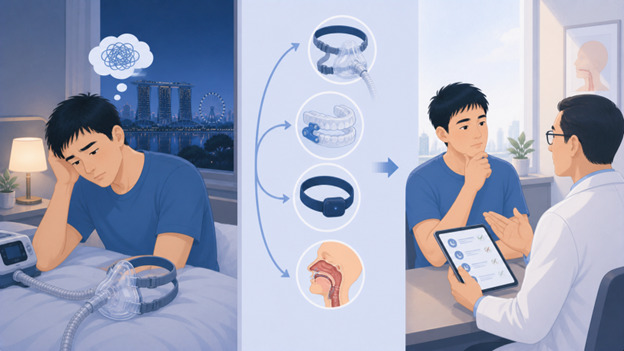
When to Consider Changing Treatments – Even Years Later

From CPAP to Surgery

Some patients use CPAP faithfully for years but eventually grow tired of the nightly ritual. If you are a CPAP user who is willing to consider surgery for sleep apnea , your ENT specialist will reassess you as if you were a new patient:

  • Repeat sleep study (to confirm that your sleep apnea severity is stable)
  • Nasal endoscopy (to reassess anatomy)
  • DISE (to map collapse patterns)

Even if you were not a surgical candidate years ago, you may be now. Your anatomy may have changed (tonsils may have enlarged further, or weight gain may have increased tongue base collapse). Alternatively, new surgical techniques (HGNS, ESP) may be available now that were not previously.

From CPAP to Oral Appliance

Mild to moderate sleep apnea patients who start on CPAP but want a more portable option can transition to an oral appliance. Your ENT specialist will order a sleep study with the oral appliance in place to confirm efficacy. Some patients use CPAP at home and an oral appliance for travel – a perfectly reasonable hybrid approach.

Treatment Escalation for Worsening Apnea

If your sleep apnea worsens over time (higher AHI on follow-up testing) despite good adherence to your current treatment, you may need to escalate:

  • Mild → moderate: Oral appliance may become insufficient; CPAP may be needed
  • Moderate → severe: CPAP pressure may need significant increase; consider HGNS or MMA
  • Severe with complications (heart failure, severe hypoxia): Urgent reassessment by ENT specialist ; consider inpatient CPAP titration or surgical consultation.

Conclusion – A Lifetime of Better Sleep

Sleep apnea is not a death sentence. It is not even a life sentence of misery. With proper diagnosis, appropriate treatment, and ongoing management, you can live a full, energetic, healthy life. You can travel the world. You can advance in your career. You can be present for your family. You can wake up each morning feeling like yourself.

The key is partnership. You and your ENT specialist are a team. You bring your willingness to follow through. They bring their medical expertise, their surgical skills, and their commitment to your long-term success. Together, you will monitor your progress, adjust to life’s changes, and catch problems before they become crises.

This four-part series has given you the complete roadmap:

  • Article 1: Recognising the sleep apnea crisis in Singapore and identifying your risk
  • Article 2: Navigating the diagnostic process from home sleep test to DISE
  • Article 3: Understanding every treatment option from CPAP to HGNS to MMA
  • Article 4: Living successfully with sleep apnea for the long haul

Now you have the knowledge. The only remaining step is action.

If you have already started treatment, schedule your annual follow-up with your ENT doctor today. If you have been putting off that first appointment, stop waiting. Call a polyclinic for a referral, or book directly with a private Singapore ENT clinic. The first step is the hardest – but the rest of your life, well-rested and fully awake, is waiting on the other side. 

Breathe easy, Singapore. You have got this.

Living with Sleep Apnea in Singapore – An ENT Specialist’s Long-Term Success Plan Read More »
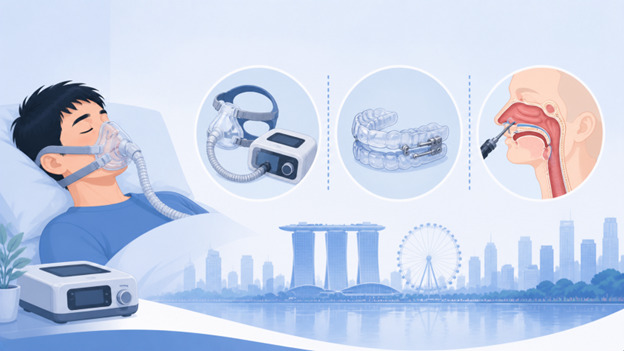
CPAP, Oral Appliances, and Surgery – An ENT Specialist’s Treatment Toolkit for Sleep Apnea in Singapore

CPAP, Oral Appliances, and Surgery - An ENT Specialist's Treatment Toolkit for Sleep Apnea in Singapore

CPAP, Oral Appliances, and Surgery: An ENT Specialist's Treatment Toolkit for Sleep Apnea in Singapore

Introduction: One Diagnosis, Many Paths to Healing

By now, you have made it through the diagnostic journey. You have completed your home sleep test or in-lab polysomnography. You have sat across from an ENT specialist who explained your Apnea-Hypopnea Index (AHI), your oxygen nadir, and perhaps the results of drug-induced sleep endoscopy (DISE). You now know with certainty: you have sleep apnea.

Now comes the most important question: What do we do about it?

The answer is not one-size-fits-all. Sleep apnea is a highly individual condition. Your anatomy, your severity, your lifestyle, your preferences, and your tolerance for different devices all matter. The good news is that Singapore offers a complete range of sleep apnea treatments. From non-invasive devices to surgical cure, an ENT specialist can guide you through every option.

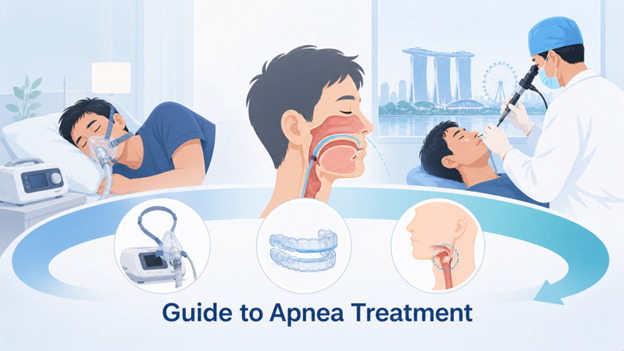
This article is the third in our four-part series on sleep apnea in Singapore. You will learn about every major treatment category: lifestyle modifications, continuous positive airway pressure (CPAP), oral appliances, positional therapy, and surgical interventions including the latest advances like hypoglossal nerve stimulation. By the end, you will understand the pros and cons of each approach and be ready to make an informed decision with your ENT specialist.

Let us begin with the treatment that requires no equipment, no medication, and no surgery: lifestyle change.

Lifestyle Modifications – The Foundation of All Sleep Apnea Care

Why Lifestyle Matters, Even with Severe Apnea

Before discussing devices and surgeries, it is essential to understand that lifestyle modifications are not optional extras. They are the foundation upon which all other sleep apnea treatments rest. Even if you ultimately need CPAP or surgery, improving your lifestyle will enhance the effectiveness of those treatments and may reduce the intensity of therapy you require.

Your ENT specialist will discuss several lifestyle targets. None of them are quick fixes, but all of them produce meaningful improvements over weeks to months.

Weight Loss – The Single Most Effective Non-Device Intervention

Obesity is the strongest modifiable risk factor for sleep apnea. Excess fat deposits in the neck and around the upper airway physically narrow the throat. Fat in the abdomen pushes upward on the diaphragm, reducing lung volume and making airway collapse more likely.

The relationship between weight and sleep apnea is linear: the more you weigh, the worse your apnea. But the reverse is also true. Losing just 10% of your body weight can reduce your AHI by 25-50%. For a patient with moderate sleep apnea (AHI 25), a 10% weight loss might bring them down to mild sleep apnea (AHI 15) – potentially avoiding CPAP altogether.

In Singapore, weight loss support is available through:

  • Health Promotion Board’s Healthy Living programmes (free or low-cost)
  • Polyclinic weight management clinics (subsidized dietitian consultations)
  • Private dietitians and nutritionists ($80-150 per session)
  • Commercial programmes (Weight Watchers, NOVI Optimum, etc.)
  • Bariatric surgery for patients with BMI > 35 and severe sleep apnea (discussed later)

Your ENT specialist is not a weight loss expert, but they can refer you to the right resources. Losing weight is hard. But treating sleep apnea without addressing weight is like bailing water from a leaky boat without plugging the hole.

Sleep Positioning – A Free and Simple Intervention

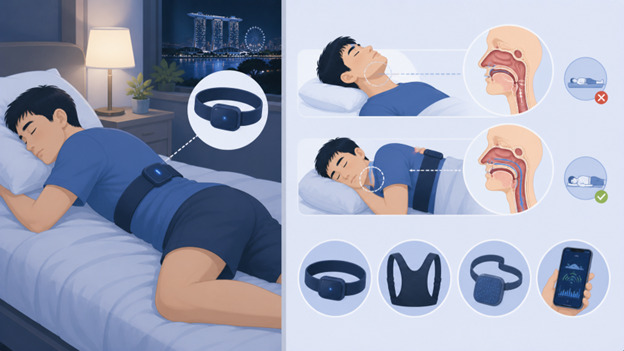
For many patients, sleep apnea is significantly worse when they sleep on their back (supine position). In supine sleep, gravity pulls the soft palate, tongue, and other structures backward into the throat. In side sleeping, gravity works in your favor, keeping the airway more open.

How do you know if you are a supine-predominant patient? Your sleep study report will include a supine AHI and a non-supine AHI. If your supine AHI is more than twice your non-supine AHI, you are a positional patient.

Positional therapy is simple: train yourself to sleep on your side. Methods include:

  • Tennis ball technique: Sew a tennis ball into the back of a t-shirt or purchase a commercial positional alarm device. When you roll onto your back, the discomfort wakes you enough to roll back to your side.
  • Pillow systems: Special wedge pillows or body pillows make side sleeping more comfortable.
  • Elevating the head of the bed: Raising the head of your bed by 4-6 inches (using blocks under the bed legs, not just pillows) can reduce upper airway collapse for some patients.

Positional therapy alone is rarely sufficient for moderate to severe sleep apnea, but it can reduce the pressure needed for CPAP or make an oral appliance more effective.

Alcohol, Sedatives, and Smoking – What to Avoid

Alcohol is a potent muscle relaxant. Drinking alcohol within 3-4 hours of bedtime relaxes the throat muscles more than natural sleep alone, worsening sleep apnea severity by 25-50% on drinking nights. Your ENT specialist will advise avoiding alcohol entirely or limiting it to early evening hours only.

Sedatives and sleeping pills (benzodiazepines, Z-drugs like zolpidem, antihistamines) have similar effects. They suppress arousal responses, meaning you may have longer apnea episodes without waking up to breathe. This leads to more severe oxygen drops. If you take sedatives for insomnia, ask your ENT specialist or GP about alternatives that are safer for sleep apnea patients.

Smoking irritates and inflames the upper airway, causing swelling that narrows the throat. Smokers have higher AHI scores than non-smokers of the same weight. Quitting smoking improves sleep apnea severity and overall health. Singapore’s Health Promotion Board offers free smoking cessation counselling and subsidised nicotine replacement therapy.

Continuous Positive Airway Pressure (CPAP) – The Gold Standard Treatment

Continuous Positive Airway Pressure (CPAP) – The Gold Standard Treatment

What Is CPAP and How Does It Work?

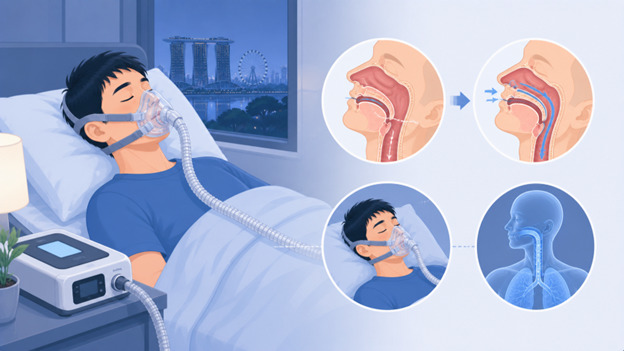
CPAP is the most effective non-surgical treatment for sleep apnea. A CPAP machine is a small, quiet blower that sits on your bedside table. A heated humidifier adds moisture to the air. A flexible tube connects the machine to a mask that you wear over your nose, or nose and mouth, while you sleep.

Here is the simple but powerful mechanism: the CPAP machine generates a continuous stream of pressurized air. That pressure travels down your airway and acts as a pneumatic splint – an invisible column of air that holds your throat open. No matter how relaxed your muscles become, the pressurized air keeps the airway patent. Snoring stops. Apneas stop. Oxygen levels normalise.

The required pressure is unique to each patient. Your ENT specialist or sleep physician will determine your pressure through a process called CPAP titration. This is often performed during a split-night sleep study: you sleep without CPAP for the first half of the night to confirm the diagnosis, then the technologist applies CPAP for the second half to find the optimal pressure.

Types of CPAP Masks – Finding Your Perfect Fit

The mask is the most critical factor in CPAP success. An uncomfortable mask leads to non-adherence. A comfortable mask leads to life-changing results. Your ENT clinic or CPAP provider should offer mask fitting sessions where you try multiple options.

Nasal mask: Covers the nose only. Best for patients who do not breathe through their mouth during sleep. Lightweight, less claustrophobic, and fewer leaks than full-face masks.

Nasal pillows mask: Small silicone pillows that seal against the nostrils. Very minimal contact, excellent for patients who feel claustrophobic or have facial hair. Not suitable for high pressures.

Full-face mask: Covers both nose and mouth. Essential for patients who breathe through their mouth during sleep (common with chronic nasal congestion). Can feel bulky and may leak more easily.

Hybrid mask: Combines nasal pillows with a mouth covering. Less bulk than full-face but still seals the mouth.

Most CPAP providers in Singapore (including those affiliated with ENT clinic practices) offer mask trials. You may be able to take masks home for a few nights before purchasing.

Common CPAP Problems and Solutions

Despite its effectiveness, 30-50% of patients stop using CPAP within the first year. Your ENT specialist wants you to succeed. Here are common problems and fixes:

Problem Solution
Dry mouth or nose Add heated humidification. Increase humidity setting. Use saline spray before bed.
Mask leaks Try a different mask size or style. Use mask liners (soft fabric between mask and skin).
Claustrophobia Start with nasal pillows. Wear the mask while awake (watching TV, reading) to desensitize.
Difficulty exhaling against pressure Ask about pressure relief features (Expiratory Pressure Relief – EPR or C-Flex). Consider BiPAP instead.
Noise from the machine Newer machines are very quiet (under 30 decibels). Place the machine on a soft surface or under the bed.
Air swallowing (aerophagia) Reduce pressure slightly if clinically appropriate. Sleep with head elevated.
Cannot fall asleep with mask Practice mask use during the day. Use CPAP ramp feature (starts at low pressure, gradually increases).

Getting a CPAP Machine in Singapore

CPAP machines and masks are available in Singapore through:

  • Public hospitals (subsidised for patients with confirmed sleep apnea and polyclinic referral)
  • Private CPAP providers (e.g., CPAP Singapore, Asia Sleep Centre, Respiratory Sleep Solutions)
  • Some ENT clinic practices (direct dispensing)

Costs in Singapore (private, not subsidised):

Item Estimated Cost
CPAP machine (basic) $800 – $1,500
CPAP machine (auto-adjusting) $1,500 – $3,000
CPAP mask $150 – $400
Heated humidifier (built into most modern machines) Included
Replacement mask cushions (every 3–6 months) $30 – $80
Replacement tubing (every 6–12 months) $20 – $50
Replacement filters (monthly) $5 – $15

Subsidised CPAP: Through public hospitals, Singapore citizens with a valid referral can obtain CPAP at 50-80% subsidy. The out-of-pocket cost may be $200-500 for the machine, plus monthly rental fees for the first few months.

Many private insurance plans in Singapore (integrated shield plans) cover CPAP machines partially or fully after diagnosis. Check with your insurer.

Oral Appliances – A CPAP Alternative for Mild to Moderate Apnea

What Are Oral Appliances?

Oral appliances (also called mandibular advancement devices or MADs) are custom-fitted mouthpieces worn during sleep. They look similar to sports mouthguards or orthodontic retainers. The appliance holds your lower jaw (mandible) slightly forward relative to your upper jaw. Because your tongue attaches to the lower jaw, moving the jaw forward pulls the tongue away from the back of the throat, opening the airway.

Oral appliances are effective primarily for patients with mild to moderate sleep apnea (AHI 5-30) and for those with positional or tongue-base collapse patterns identified on DISE.

Custom-Fitted vs. Boil-and-Bite Appliances

There are two categories of oral appliances:

Boil-and-bite (over-the-counter): Available online or in pharmacies for $50-150. You soften the material in hot water, bite down to create an impression, and cool. These are not recommended by ENT specialist physicians. They can cause jaw pain, tooth movement, and are rarely effective because they do not provide precise advancement.

Custom-fitted (by dentist or ENT specialist): Your ENT specialist or a collaborating dental sleep specialist takes digital scans or impressions of your teeth. A dental laboratory fabricates a precise appliance that fits perfectly. These cost 1,500 to 3,500 but are effective, comfortable, and safe for long-term use.

Pros and Cons of Oral Appliances

Pros Cons
No machine, no electricity, no noise Only effective for mild to moderate apnea (typically AHI < 30)
Extremely portable (fits in a small case) Requires healthy teeth and gums to anchor the device
Easy to use while travelling Can cause jaw pain, tooth soreness, or bite changes
No mask or headgear May worsen TMJ (jaw joint) problems
High adherence rates (70–80% long-term use) Not suitable for patients with severe apnea or central apnea

Your ENT specialist can refer you to a qualified dental sleep specialist in Singapore for appliance fitting. Many ENT clinic practices have an affiliated dentist on-site or in the same building.

Positional Therapy Devices – Simple Solutions for Positional Apnea

Positional Therapy Devices – Simple Solutions for Positional Apnea

For patients with supine-predominant sleep apnea (supine AHI at least twice non-supine AHI), positional therapy may be sufficient as monotherapy for mild cases or as an adjunct to other treatments.

Commercial positional devices available in Singapore include:

  • NightShift: A wearable device worn around the neck that vibrates gently when you roll onto your back.
  • Sona pillow system: A pillow with an inflatable chamber that encourages side sleeping.
  • Aurora Positional Therapy: A lightweight belt with a sensor that vibrates on back sleeping.

Surgical Treatments – When Non-Invasive Options Fail

Who Is a Candidate for Sleep Apnea Surgery?

Surgery for sleep apnea is not a first-line treatment. Your ENT specialist will consider surgery only if:

  • You have failed CPAP (cannot tolerate it or refuse to use it)
  • You have failed oral appliance therapy
  • You have a surgically correctable anatomical abnormality clearly identified on DISE
  • You have severe sleep apnea with complications (oxygen drops below 80%, heart arrhythmias)
  • You have a body mass index (BMI) below 35 (surgery is less effective in obesity)

The goal of sleep apnea surgery is not always to cure the condition entirely. More often, the goal is to reduce the AHI to a level where CPAP pressure can be lowered, or to convert a patient from severe to moderate apnea where an oral appliance becomes effective.

Nasal Surgery – Improving the Gateway

Nasal obstruction from a deviated septum, enlarged turbinates, or nasal polyps does not cause sleep apnea on its own (the primary site of collapse is behind the nose). However, nasal obstruction forces mouth breathing, which worsens collapse. Nasal surgery alone reduces AHI by only 10-20%, but it can significantly improve CPAP tolerance.

Procedures include:

  • Septoplasty: Straightening the deviated septum
  • Turbinate reduction: Shrinking swollen nasal tissues (radiofrequency, coblation, or microdebrider)
  • Polypectomy: Removing nasal polyps

These procedures are performed through the nostrils (endoscopic) with no external incisions. Recovery is 1-2 weeks of congestion and mild bleeding. Most are day surgeries (go home the same day).

Palate Surgery (UPPP, LAUP, Expansion Sphincter Pharyngoplasty)

If DISE shows palatal collapse as the primary problem, palate surgery may help. The most common procedure is uvulopalatopharyngoplasty (UPPP) , which removes the uvula, trims the soft palate, and tightens the palatal muscles.

Newer, more effective techniques include:

  • Expansion sphincter pharyngoplasty (ESP): Repositions the palatal muscles laterally to widen the airway. Preferred over traditional UPPP by modern ENT specialist surgeons.
  • Lateral pharyngoplasty: Similar concept – opens the lateral walls of the throat.
  • Relocation pharyngoplasty: Another modification of UPPP with better outcomes.

Palate surgery reduces AHI by 50-60% on average. For carefully selected patients (palate-only collapse, BMI < 30), success rates (defined as AHI < 20 and 50% reduction) reach 70-80%.

Recovery from palate surgery is notoriously painful (7-10 days of significant throat pain, similar to a bad tonsillectomy). Patients need liquid or soft diets for 1-2 weeks. There is a small risk of velopharyngeal insufficiency (nasal regurgitation of liquids or nasal-sounding speech). Your ENT specialist will discuss these risks in detail.

Tongue Base Surgery

For patients with tongue base collapse on DISE, the tongue is the culprit. Tongue base reduction can be achieved through:

  • Radiofrequency ablation of the tongue base: A needle electrode is inserted into the tongue under general anesthesia. Radiofrequency energy shrinks the tissue over several weeks. Minimal pain, no external scars. Effective for mild to moderate tongue base collapse. Costs $5,000-8,000.
  • Midline glossectomy: Surgical removal of a strip of tissue from the central tongue. More invasive, more pain, but more effective for severe cases.
  • Hyoid suspension: The hyoid bone (at the base of the tongue) is sutured forward to the thyroid cartilage, pulling the tongue base away from the throat. Often combined with other procedures.

Hypoglossal Nerve Stimulation (HGNS) – The Latest Breakthrough

This is the most exciting development in sleep apnea surgery in the last decade. HGNS (brand name Inspire) is essentially a “pacemaker for the tongue.” A small, battery-powered implantable device is placed under the skin of the upper chest during outpatient surgery. A sensing lead is placed between the ribs to detect breathing effort. A stimulation lead is wrapped around the hypoglossal nerve (the nerve that controls tongue protrusion).

Here is how it works: When you exhale, the device senses the breathing effort and does nothing. When you inhale, the device delivers a mild electrical pulse to the hypoglossal nerve, causing the tongue to stiffen and move forward slightly – just enough to keep the airway open. You cannot feel the stimulation while asleep.

Who is a candidate for HGNS?

  • AHI between 15 and 65 (moderate to severe sleep apnea )
  • BMI less than 32 (obesity reduces effectiveness)
  • No complete concentric collapse of the palate on DISE (this pattern does not respond well)
  • Failed CPAP (cannot tolerate or refuse)

Outcomes: In clinical studies, HGNS reduced AHI by an average of 68-75%. Two-thirds of patients achieve an AHI below 20. Snoring is eliminated or dramatically reduced. Patients wake up without a mask, without a machine, and without oral appliances.

Maxillomandibular Advancement (MMA) – The Most Effective but Most Invasive

MMA is major jaw surgery. The upper jaw (maxilla) and lower jaw (mandible) are cut, moved forward as a single unit, and fixed with titanium plates and screws. Moving both jaws forward pulls the entire tongue base and soft palate away from the throat, dramatically enlarging the airway.

Results: MMA is the most effective surgical treatment for sleep apnea. Success rates (AHI < 20 and 50% reduction) exceed 85-90%. Many patients achieve an AHI below 5 – a complete cure.

The catch: MMA requires general anaesthesia, a 1-2 night hospital stay, 4-6 weeks of liquid/soft diet, and 6-8 weeks before returning to full activity. Most patients need orthodontics (braces) before and after. MMA is reserved for patients with severe sleep apnea who have failed all other treatments.

Bariatric Surgery for Obesity-Related Sleep Apnea

For patients with severe obesity (BMI > 35) and sleep apnea, gastric bypass or sleeve gastrectomy is not a sleep apnea surgery per se, but it is a powerful treatment. Weight loss of 30-50% of excess body weight after bariatric surgery reduces AHI by 50-75%. Some patients achieve complete remission.

In Singapore, bariatric surgery is available at public and private hospitals. Public subsidies apply for Singapore citizens with BMI > 37.5 (or > 32 with obesity-related complications like sleep apnea ).

Choosing Your Path – A Decision Framework

With so many options, how do you choose? Your ENT specialist can help, but here is a framework to guide the conversation:

Step 1: Know your severity

  • AHI 5-15 (mild): Lifestyle changes + positional therapy + oral appliance (optional), CPAP (optional)
  • AHI 15-30 (moderate): CPAP or oral appliance or HGNS (selected patients)
  • AHI >30 (severe): CPAP strongly recommended; consider HGNS or MMA if CPAP fails

Step 2: Know your anatomy (from DISE)

  • Palate-only collapse → Palate surgery (ESP) may cure or greatly improve
  • Tongue base collapse → Oral appliance or tongue base surgery or HGNS
  • Complete concentric palatal collapse → CPAP or MMA; tongue surgery not effective
  • Multilevel collapse → Combination therapy or HGNS or MMA

Step 3: Know your preferences and tolerance

  • Willing to wear a mask every night? → CPAP
  • Cannot tolerate a mask but okay with mouthpiece? → Oral appliance
  • Refuse all devices but okay with surgery? → Surgical evaluation
  • Failed everything? → HGNS or MMA

Conclusion – There Is a Solution for Everyone

Sleep apnea is a treatable condition. There is no excuse for suffering in silence. Whether you choose lifestyle changes, CPAP, an oral appliance, positional therapy, or surgery, your ENT specialist in Singapore can guide you to the right option.

Many patients fear CPAP but find after a few weeks that they cannot imagine sleeping without it. Others cannot tolerate CPAP at all but thrive with an oral appliance or HGNS. Some patients undergo surgery and wake up for the first time in years feeling truly rested.

Your journey starts with a single step: booking that ENT clinic appointment. Bring your sleep study results. Bring your questions. Bring your willingness to try something new. Your ENT specialist will meet you there.

In Article 4 of this series, we will discuss long-term success – how to monitor your treatment, how to maintain your weight loss, and how to live fully with sleep apnea in Singapore.

But for now, choose a path and start walking. Your better sleep is waiting.

CPAP, Oral Appliances, and Surgery – An ENT Specialist’s Treatment Toolkit for Sleep Apnea in Singapore Read More »

Beyond the Snore – How an ENT Specialist Diagnoses Sleep Apnea in Singapore

Beyond the Snore - How an ENT Specialist Diagnoses Sleep Apnea in Singapore

Beyond the Snore: How an ENT Specialist Diagnoses Sleep Apnea in Singapore

Introduction: From Suspicion to Certainty

In Article 1, you learned that Singapore is in the midst of a sleep apnea crisis. You discovered the risk factors, the warning signs, and the STOP-BANG questionnaire that helps identify who needs further evaluation. But suspicion is not the same as diagnosis. Knowing you might have sleep apnea is very different from knowing for certain – and knowing the severity.

This is where an ENT specialist becomes indispensable. Diagnosing sleep apnea is not a single test but a process. It involves ruling out other conditions, measuring the frequency and depth of breathing pauses, assessing oxygen levels, and evaluating the anatomy of your airway. Only with all this information can your ENT specialist recommend the right treatment for your specific case.

This article is the second in our four-part series on sleep apnea in Singapore. You will learn about the diagnostic tools available in local ENT clinic settings, from simple home sleep tests to sophisticated in-lab studies and a specialized procedure called drug-induced sleep endoscopy. By the end, you will understand exactly what happens when you pursue a sleep apnea diagnosis in Singapore – and what the numbers mean for your health.

Let us begin with the most common first step: the home sleep test.

The Diagnostic Journey – Where to Start

The Diagnostic Journey – Where to Start

The Role of Your ENT Specialist vs. Your GP

Before diving into tests, it is worth understanding how different providers fit into the diagnostic pathway. In Singapore, both general practitioners (GPs) and ENT specialist physicians can order sleep apnea testing. However, their roles and expertise differ significantly.

A GP can:

  • Administer the STOP-BANG questionnaire
  • Suspect sleep apnea based on symptoms
  • Order a home sleep test (HST)
  • Prescribe a CPAP machine if the HST confirms moderate to severe sleep apnea

An ENT specialist can do all of the above, plus:

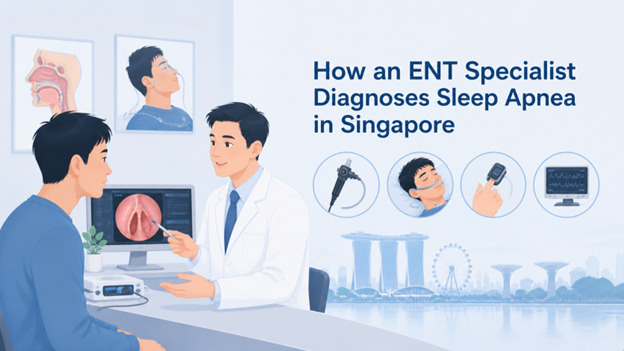
  • Perform nasal endoscopy to visualize airway anatomy
  • Identify surgically correctable causes of sleep apnea (large tonsils, deviated septum, nasal polyps)
  • Order specialized tests like drug-induced sleep endoscopy (DISE)
  • Offer the full range of treatment options, including oral appliances, CPAP, and surgery

For straightforward, uncomplicated sleep apnea, a GP-led pathway is acceptable. But for patients with complex anatomy, failed CPAP trials, or interest in non-CPAP options, an ENT clinic provides a higher level of care. Many Singaporeans choose to see an ENT specialist first precisely because of this comprehensive approach.

Ruling Out Other Causes of Your Symptoms

Before ordering a sleep apnea test, your ENT specialist will consider whether your symptoms could be caused by something else. Many conditions mimic sleep apnea or occur alongside it:

  • Chronic nasal obstruction from allergies, polyps, or a deviated septum can cause mouth breathing and snoring that sounds like apnea
  • Gastroesophageal reflux disease (GERD) can wake you with coughing or choking sensations
  • Insomnia with anxiety can cause unrefreshing sleep and daytime fatigue
  • Restless legs syndrome (RLS) can fragment sleep without airway obstruction
  • Narcolepsy causes severe daytime sleepiness but different nighttime patterns

Your ENT specialist will take a thorough history to distinguish these possibilities. Nasal endoscopy is particularly valuable here – it can instantly rule in or rule out structural nasal problems as the primary issue. If your examination is completely normal, the focus shifts strongly toward sleep apnea testing.

Home Sleep Testing – The Convenient First Step

What Is a Home Sleep Test?

A home sleep test (HST), also called a home sleep apnea test (HSAT), is exactly what it sounds like: a simplified sleep study that you perform in your own bed. The equipment is portable, battery-powered, and designed to be user-friendly. You pick up the device from your ENT clinic or a sleep center, watch a short instructional video, and take it home for one or two nights.

A typical HST measures:

  • Nasal airflow (via a small cannula that sits under your nose)
  • Respiratory effort (elastic belts around your chest and abdomen that sense breathing movements)
  • Oxygen saturation (a finger clip pulse oximeter)
  • Heart rate (from the same finger clip)
  • Body position and snoring intensity (via a built-in sensor or position marker)

Unlike a full in-lab sleep study, an HST does not measure brain waves (EEG), eye movements (EOG), muscle tone (EMG), or leg movements. This means an HST cannot tell you how much REM and deep sleep you are getting, nor can it rule out other sleep disorders like narcolepsy or RLS.

Who Is a Good Candidate for Home Testing?

Your ENT specialist will recommend an HST if you meet certain criteria:

  • High pre-test probability of moderate to severe sleep apnea (STOP-BANG score 3 or higher)
  • No significant other medical conditions (especially heart or lung disease)
  • No suspicion of other sleep disorders
  • Able to follow the instructions for setting up the equipment

HST is generally not recommended for patients with:

  • Congestive heart failure or chronic obstructive pulmonary disease (COPD)
  • Neuromuscular diseases (ALS, muscular dystrophy)
  • Suspected central sleep apnea
  • Significant insomnia or other sleep disorders

How to Complete a Home Sleep Test in Singapore

The process in a Singapore ENT clinic typically follows these steps:

  1. Consultation: Your ENT specialist determines that HST is appropriate and explains the procedure.
  2. Equipment pick-up: You collect the device from the clinic or a partner sleep center. Some clinics deliver the device to your home.
  3. Setup: On the night of the test, you attach the belts, place the nasal cannula, and put on the finger clip. Most devices start recording automatically when you turn them on.
  4. Sleep: You sleep normally. Try to maintain your usual bedtime routine. If you need to use the bathroom during the night, you can disconnect and reconnect the finger clip.
  5. Return: You return the device to the clinic the next day. The data is downloaded and analyzed by the ENT specialist or a sleep technologist.
  6. Results: You receive your results at a follow-up appointment, typically within one to two weeks.

Understanding Your Home Sleep Test Results

Your HST report will include several key numbers. An ENT specialist will walk you through each one. The most important is the Apnea-Hypopnea Index (AHI) .

What is AHI? The AHI is the average number of apnea events (complete breathing pauses) plus hypopnea events (partial breathing pauses with oxygen drop) per hour of sleep.

AHI Severity Classification:

AHI Range Severity Category What It Means
Less than 5 Normal / No sleep apnea You do not have clinically significant sleep apnea
5 to 15 Mild sleep apnea Your symptoms may be mild; treatment is optional based on daytime symptoms
15 to 30 Moderate sleep apnea Treatment is strongly recommended to prevent health consequences
Over 30 Severe sleep apnea Treatment is essential for your health and safety

Other important numbers on your HST report:

  • Oxygen nadir: The lowest oxygen saturation recorded during sleep. A drop below 90% is concerning; below 80% is severe.
  • Time spent with oxygen below 90% (T90): The total minutes (or percentage of sleep time) that your oxygen was dangerously low.
  • Respiratory disturbance index (RDI): Similar to AHI but includes respiratory effort-related arousals (RERAs). RDI is often slightly higher than AHI.
  • Snoring intensity: Measured in decibels. This is more for your bed partner’s benefit than for clinical decision-making.

Limitations of Home Sleep Testing

While HST is convenient and affordable, it has important limitations that your ENT specialist will discuss:

  • False negatives: HST can miss mild sleep apnea because it does not measure arousals directly. You might have respiratory events that do not drop oxygen enough to trigger the oximeter but still fragment your sleep.
  • Underestimation of severity: Without EEG, HST cannot distinguish sleep from wake. If you lie awake for part of the night, the device may wrongly count that time as “sleep,” diluting your AHI.
  • No sleep stage data: You cannot know if your sleep apnea is worse during REM sleep (common) or if you have other sleep disorders.
  • User error: If you place the belts incorrectly or the cannula falls out, the study may be invalid.

If your HST is negative (AHI < 5) but your ENT specialist strongly suspects sleep apnea based on symptoms and physical examination, the next step is an in-lab sleep study.

In-Lab Sleep Study (Polysomnography) – The Gold Standard

In-Lab Sleep Study (Polysomnography) – The Gold Standard

What Happens During an In-Lab Sleep Study?

Polysomnography (PSG) is the gold standard diagnostic test for sleep apnea. Unlike HST, PSG is performed overnight in a sleep laboratory or hospital-based sleep center. A sleep technologist monitors you throughout the night, and the study captures far more data.

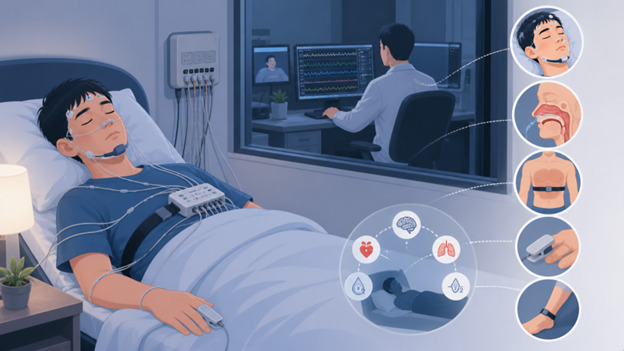
When you arrive at the sleep center (typically around 8:00 PM to 9:00 PM), a technologist attaches approximately 20 sensors to your body. Do not worry – this sounds intimidating but is painless. The sensors include:

  • EEG electrodes (on your scalp, held with paste or tape) to measure brain waves
  • EOG electrodes (near your eyes) to track eye movements and identify REM sleep
  • EMG electrodes (on your chin and legs) to measure muscle tone and detect leg movements
  • ECG electrodes (on your chest) to monitor heart rhythm
  • Nasal pressure transducer and thermistor to measure airflow
  • Respiratory belts (chest and abdomen) to measure breathing effort
  • Pulse oximeter (on your finger) to measure oxygen and heart rate
  • Snore microphone (taped to your throat)
  • Body position sensor

You then try to sleep as normally as possible in a private, hotel-like room. The technologist watches you from a nearby control room on video and audio monitors. If your sleep apnea is severe, the technologist may wake you in the middle of the night to start a CPAP trial (called a split-night study).

In the morning (around 6:00 AM), the technologist wakes you and removes the sensors. You go home. A sleep physician or ENT specialist with sleep medicine training interprets your study over the following days.

What an In-Lab Study Reveals That Home Testing Cannot

The additional sensors in a PSG provide rich information that an HST simply cannot capture:

  • Sleep architecture: PSG shows exactly how much time you spend in each sleep stage (N1, N2, N3 deep sleep, and REM). This reveals whether sleep apnea is robbing you of restorative sleep.
  • Arousal index: This counts how many times your brain briefly wakes up (arousals) per hour of sleep. A high arousal index with normal AHI suggests a different sleep disorder.
  • REM-specific AHI: Many people have sleep apnea that is much worse during REM sleep. PSG quantifies this. If your REM AHI is high but non-REM AHI is normal, you still need treatment.
  • Supine vs. non-supine AHI: PSG shows whether your apnea worsens when you sleep on your back (supine) versus your side. This helps determine if positional therapy could help you.
  • Leg movement index: PSG detects periodic limb movements of sleep (PLMS), which can mimic or coexist with sleep apnea.
  • Carbon dioxide monitoring: For patients suspected of central sleep apnea or hypoventilation syndromes, PSG can measure transcutaneous CO2.

Drug-Induced Sleep Endoscopy (DISE) – The ENT Specialist's Secret Weapon

What Is DISE and Why Is It Different?

Home sleep tests and in-lab PSG tell you whether you have sleep apnea and how severe it is. But they do not tell you where your airway is collapsing. This is a critical gap because different collapse patterns require different treatments.

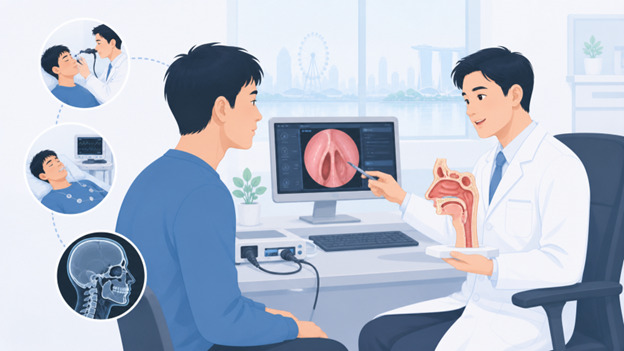
Drug-induced sleep endoscopy (DISE) solves this problem. DISE is a procedure performed by an ENT specialist in an operating room or procedure suite. You receive mild intravenous sedation (propofol or similar) to induce sleep that closely mimics natural sleep. Once you are asleep, the ENT specialist passes a flexible endoscope through your nostril and observes your airway in real time.

Using DISE, your ENT specialist can identify the exact level(s) of collapse:

  • Palatal collapse: The soft palate and uvula fall backward, blocking the nasopharynx
  • Tongue base collapse: The back of the tongue falls into the throat, obstructing the oropharynx
  • Lateral pharyngeal wall collapse: The side walls of the throat cave inward
  • Epiglottic collapse: The epiglottis (the leaf-shaped cartilage that protects your windpipe) flops backward over the airway
  • Multilevel collapse: Two or more levels collapse simultaneously (very common)

Who Needs DISE?

Not every sleep apnea patient requires DISE. Your ENT specialist will recommend DISE if:

  • You have failed CPAP therapy (cannot tolerate it or do not benefit)
  • You are considering upper airway surgery (e.g., palate surgery, tongue base reduction)
  • You are considering an oral appliance and need to know if your collapse pattern is favorable for this treatment
  • You have persistent sleep apnea after previous surgery and need revision planning

DISE is not a first-line diagnostic test. It is reserved for patients who have already completed a sleep study and are now at the treatment decision crossroads. Many private ENT clinic locations in Singapore offer DISE.

The VOTE Classification System

During DISE, your ENT specialist uses a standardized scoring system called VOTE to describe your collapse pattern:

Structure Degree of Collapse (0 = none, 1 = partial, 2 = complete) Configuration (Concentric vs. Anteroposterior vs. Lateral)
Velum (soft palate) 0, 1, or 2 AP, concentric, lateral
Oropharynx (lateral walls and tonsils) 0, 1, or 2 Lateral, concentric
Tongue base 0, 1, or 2 AP, concentric
Epiglottis 0, 1, or 2 AP, concentric

For example, a patient might have a VOTE score of: Velum 2 (complete, AP), Oropharynx 1 (partial, lateral), Tongue base 2 (complete, AP), Epiglottis 0. This tells the ENT specialist exactly which surgeries or devices are likely to help.

Putting It All Together – From Diagnosis to Treatment Plan

The Complete Diagnostic Pathway

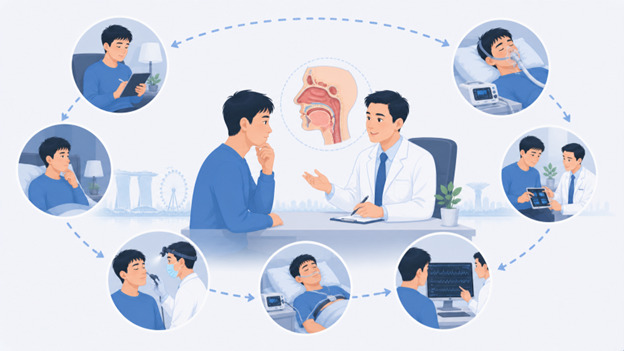
Here is how all the pieces fit together in a Singapore ENT clinic:

Step 1: Initial consultation (30-45 minutes)

  • History and physical examination
  • STOP-BANG screening
  • Nasal endoscopy to assess anatomy

Step 2: Diagnostic testing

  • Low suspicion → Lifestyle advice, no testing
  • Moderate suspicion → Home sleep test (HST)
  • High suspicion or comorbidities → In-lab polysomnography (PSG)

Step 3: Result interpretation

  • No sleep apnea (AHI <5) → Reassess for other causes of symptoms
  • Mild sleep apnea (AHI 5-15) → Discuss lifestyle changes, optional treatment
  • Moderate to severe sleep apnea (AHI >15) → Treatment discussion, strongly recommended

Step 4: Advanced evaluation (if needed)

  • Failed CPAP trial or considering surgery → Drug-induced sleep endoscopy (DISE)
  • Abnormal anatomy identified → Surgical consultation

Step 5: Treatment plan

  • CPAP, oral appliance, positional therapy, lifestyle changes, surgery, or combination

Real Patient Example – Mr. Tan, Age 52, Singapore

To make this concrete, consider a typical patient seen at an ENT clinic in Singapore:

Background: Mr. Tan is a 52-year-old Chinese Singaporean, BMI 28, works as a financial analyst, long hours, high stress. His wife reported loud snoring and witnessed breathing pauses.

Initial visit: STOP-BANG score 6 (snore, tired, observed apnea, hypertension, age >50, neck 42 cm). Nasal endoscopy showed mild nasal congestion but no polyps or severe deviation. Tonsils were large (Grade 3 out of 4).

Home sleep test: AHI 28 per hour, oxygen nadir 82%, T90 of 12 minutes. Severity: Moderate to severe sleep apnea.

DISE (ordered because Mr. Tan wanted to avoid CPAP): Showed complete concentric palatal collapse and partial tongue base collapse. No epiglottic involvement.

Treatment plan: Given the large tonsils and palatal collapse pattern, Mr. Tan underwent tonsillectomy plus uvulopalatopharyngoplasty (UPPP). Post-surgery home sleep test showed AHI 9 – a 68% reduction. He still has mild sleep apnea but now manages with positional therapy (sleeping on his side) and feels dramatically better.

Without DISE, Mr. Tan might have been prescribed CPAP (which he would have struggled to tolerate) or an oral appliance (unlikely to help with his particular collapse pattern). The comprehensive ENT specialist evaluation led to a successful surgical outcome.

Conclusion – Diagnosis Is the Gateway to Treatment

Sleep apnea is not a vague condition. It is a measurable, quantifiable disease. The numbers on your sleep study – your AHI, your oxygen nadir, your arousal index – tell a precise story about what happens to your body every night. But numbers alone do not tell the whole story. The anatomy of your collapse, visualized through endoscopy and DISE, completes the picture.

An ENT specialist in Singapore is uniquely positioned to guide you through this diagnostic journey. They can order the right test (HST vs. PSG), interpret the results in the context of your physical examination, and if needed, perform advanced procedures like DISE to map your airway collapse exactly.

By the time you complete the diagnostic process, you and your ENT specialist will know:

  • Whether you have sleep apnea (yes or no)
  • How severe it is (mild, moderate, or severe)
  • Where your airway collapses (palate, tongue, lateral walls, epiglottis – or multiple levels)
  • What treatments are most likely to succeed

Armed with this knowledge, you are ready to move forward. In Article 3, we will explore the full range of sleep apnea treatments available in Singapore: CPAP, oral appliances, lifestyle changes, and surgical options. Your ENT specialist will help you choose the right path.

But first, complete the diagnosis. If you scored 3 or higher on the STOP-BANG questionnaire, visit https://drkhliment.com.sg/sleep-apnea-singapore-treatment-surgery/ to schedule an appointment for consultation with an ENT doctor. The test is straightforward. The answers are waiting.

Beyond the Snore – How an ENT Specialist Diagnoses Sleep Apnea in Singapore Read More »

The Singapore Sleep Crisis: An ENT Specialist’s Step-by-Step Guide to Apnea Treatment

Why Singapore Is Battling a Silent Sleep Epidemic

Introduction: Why Singapore Is Battling a Silent Sleep Epidemic

Singapore is known for many things: world-class infrastructure, economic prosperity, a thriving food scene, and a population that never seems to stop moving. But beneath the surface of this bustling city-state lies a hidden health crisis that affects hundreds of thousands of Singaporeans every single night. The crisis is called sleep apnea. And most people who have it do not even know they are suffering.

Sleep apnea is a condition where your breathing repeatedly stops and starts during sleep. These pauses can last from 10 seconds to over a minute, and they can happen hundreds of times in a single night. Each time breathing stops, your brain briefly wakes you up to restart the process. You never enter deep, restorative sleep. You wake up exhausted, irritable, and foggy-headed – even after spending eight or nine hours in bed.

This article is the first in a four-part series written from the perspective of an ENT specialist treating sleep apnea in Singapore. You will learn why sleep apnea is so common in this country, what symptoms to watch for, and how to take the first step toward diagnosis and treatment. 

By the end of this series, you will have a complete, step-by-step roadmap to reclaiming your sleep and your health.

Let us begin by understanding the scope of the problem.

Understanding Sleep Apnea – More Than Just Loud Snoring

What Exactly Is Sleep Apnea?

The word “apnea” comes from Greek, meaning “without breath.” Sleep apnea is exactly that: episodes without breathing during sleep. There are three main types, but one dominates the discussion in Singapore:

Obstructive Sleep Apnea (OSA): This is the most common form, affecting over 85% of sleep apnea patients. OSA occurs when the muscles in the back of your throat relax too much during sleep. These muscles support the soft palate, the uvula, the tonsils, and the tongue. When they relax, your airway narrows or closes completely. You try to breathe, but air cannot get through. Your oxygen level drops. Your brain senses the danger and briefly wakes you up – often with a gasping, choking, or snorting sound – so you can reopen your airway. You fall back asleep, and the cycle repeats.

Central Sleep Apnea (CSA): This is much rarer. CSA occurs when your brain does not send the proper signals to the muscles that control breathing. There is no airway blockage. Instead, your body simply forgets to breathe. CSA is more common in people with heart failure, stroke survivors, or those using certain medications like opioids.

Complex Sleep Apnea Syndrome: Also called treatment-emergent central sleep apnea, this is a combination of both OSA and CSA. It is usually diagnosed when someone starts CPAP therapy for OSA and then develops central apneas.

Throughout this series, when we say sleep apnea, we are referring to obstructive sleep apnea unless specified otherwise. This is the condition that an ENT specialist in Singapore sees most often in their practice.

The Difference Between Snoring and Sleep Apnea

Many people assume that loud snoring is just annoying but harmless. This is a dangerous misconception. While not everyone who snores has sleep apnea, nearly everyone with sleep apnea does snore. The difference lies in what happens during and after the snoring.

Feature Simple Snoring Sleep Apnea
Sound quality Usually steady, rhythmic Often interrupted by pauses, gasps, or snorts
Breathing pattern Continuous Repeated stops and starts
Daytime sleepiness Rare or mild Common and often severe
Morning headaches Uncommon Frequent
Witnessed apneas No Bed partner often observes breathing pauses
Health risks Minimal Heart disease, stroke, diabetes, accidents

If your bed partner has ever told you that you stop breathing during sleep, or if you wake up gasping for air, you need to see an ENT specialist for evaluation. Snoring alone may be manageable with lifestyle changes. But sleep apnea requires active treatment.

Why Is Sleep Apnea So Common in Singapore?

The Perfect Storm of Risk Factors

Singapore has one of the highest rates of sleep apnea in Asia. Studies estimate that nearly 30% of adult Singaporeans have at least moderate sleep apnea, and many more have mild, undiagnosed disease. Why is the number so high? Several factors unique to Singapore create a perfect storm:

  1. High Rates of Obesity: Obesity is the single strongest risk factor for sleep apnea. Excess fat deposits around the neck and upper airway narrow the throat, making collapse during sleep more likely. According to the Health Promotion Board, the prevalence of obesity in Singapore has been rising steadily, from 8.6% in 2017 to 10.5% in 2020. As waistlines expand, airways narrow.
  2. Asian Facial Anatomy: This is a critical point that many ENT specialist physicians in Singapore emphasize. Compared to Caucasians, Asians – including Chinese, Malay, and Indian Singaporeans – tend to have:
  • Smaller jaw bones (retrognathia)
  • Steeper cranial base angles
  • Larger tongue volumes relative to their mouth size
  • Higher Mallampati scores (meaning the tongue and soft palate take up more space in the throat)

These anatomical differences mean that an Asian person with a normal body mass index (BMI) may still have sleep apnea because their airway is simply more crowded than a Caucasian person of the same weight.

  1. Urban Lifestyle and Chronic Stress: Singapore is a high-pressure society. Long working hours, competitive academic environments, and the constant pursuit of success create chronic stress. Stress elevates cortisol levels, which can disrupt sleep architecture and worsen muscle relaxation during sleep – exactly what triggers airway collapse in sleep apnea.
  2. Air Pollution and Nasal Congestion: While Singapore’s air quality is generally good, seasonal haze from regional forest fires can cause significant nasal inflammation. Chronic nasal congestion forces people to breathe through their mouths during sleep, which bypasses the natural airway-stabilizing effects of nose breathing. Mouth breathing increases the risk of airway collapse.
  3. An Aging Population: Singapore has one of the fastest-aging populations in the world. By 2030, one in four Singaporeans will be aged 65 or older. Sleep apnea becomes more common with age because the muscles in the throat lose tone and elasticity. The older you are, the higher your risk.

The Shocking Prevalence Statistics

Let us look at the numbers. A landmark study published in the Singapore Medical Journal found that among adults aged 30 to 70 years:

  • 1 in 3 Singaporeans has moderate to severe sleep apnea
  • 1 in 5 has severe sleep apnea (more than 30 breathing pauses per hour of sleep)
  • Among men over 50, the rate exceeds 50%
  • Among obese Singaporeans (BMI > 30), the rate exceeds 80%

Despite these staggering numbers, an estimated 85-90% of Singaporeans with sleep apnea remain undiagnosed. That means for every person receiving treatment at an ENT clinic or sleep center, eight to nine others are suffering in silence – completely unaware that their fatigue, snoring, and morning headaches have a treatable cause.

Signs and Symptoms – Are You at Risk?

Signs and Symptoms – Are You at Risk

Night time Symptoms (What Happens While You Sleep)

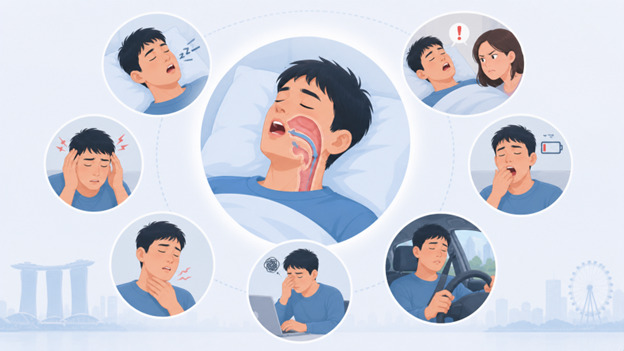
Your body gives you many clues while you sleep. You may not notice them because you are unconscious, but your bed partner certainly will. Common night time signs of sleep apnea include:

  • Loud, persistent snoring that disturbs others in the room
  • Witnessed breathing pauses – your partner notices you stop breathing for 10 seconds or longer, followed by a gasp or snort
  • Choking or gasping sounds as you restart breathing
  • Restless sleep with frequent position changes
  • Night sweats (caused by the body’s stress response to low oxygen)
  • Frequent trips to the bathroom at night (nocturia) – the body produces more urine when oxygen levels drop
  • Teeth grinding (bruxism) – the jaw clenches or grinds as the body struggles to reopen the airway

Daytime Symptoms (What Happens When You're Awake)

The effects of sleep apnea follow you into the daylight. Even if you think you slept “okay,” fragmented sleep takes a cumulative toll. Common daytime signs include:

  • Excessive daytime sleepiness – you struggle to stay awake during meetings, while driving, or during quiet activities like reading or watching TV. Many patients fall asleep within minutes if they sit still.
  • Unrefreshing sleep – you wake up feeling as tired as when you went to bed, even after 8 hours in bed
  • Morning headaches – caused by carbon dioxide retention and oxygen deprivation overnight
  • Dry mouth or sore throat upon waking – from breathing through an open mouth all night
  • Difficulty concentrating – brain fog, forgetfulness, and trouble focusing on tasks
  • Irritability and mood swings – chronic sleep deprivation makes you short-tempered
  • Depression and anxiety – long-term untreated sleep apnea is strongly linked to mood disorders
  • Low libido and erectile dysfunction – sleep apnea disrupts hormone production

The STOP-BANG Questionnaire – A Quick Self-Assessment

ENT specialist physicians in Singapore often use a simple screening tool called STOP-BANG to identify patients who need formal sleep apnea testing. Answer these eight questions honestly:

Letter Question Yes/No
S Do you Snore loudly (louder than talking or loud enough to be heard through closed doors)?
T Do you often feel Tired, fatigued, or sleepy during the daytime?
O Has anyone Observed you stop breathing, choke, or gasp during sleep?
P Do you have high blood Pressure (or take medication for hypertension)?
B Is your Body Mass Index (BMI) > 35? (Calculate your BMI)
A Are you Aged over 50 years old?
N Is your Neck circumference > 40 cm (for men) or > 35 cm (for women)?
G Are you Gender male? (Men have higher risk)

Scoring:

  • Low risk: 0-2 yes answers
  • Intermediate risk: 3-4 yes answers
  • High risk: 5-8 yes answers

If you score 3 or higher, you have a significant chance of having sleep apnea. You should discuss these results with an ENT specialist in Singapore.

The Health Consequences of Untreated Sleep Apnea

Short-Term Consequences – Why You Feel Terrible

Even in the short term, untreated sleep apnea degrades your quality of life. The constant sleep fragmentation prevents you from reaching the deep, restorative stages of sleep known as slow-wave sleep and REM sleep. Your body cannot repair itself. Your brain cannot consolidate memories. Your emotional regulation suffers. Many patients describe their pre-treatment life as “going through the motions” – awake but not truly alive.

The daytime sleepiness from sleep apnea also dramatically increases your risk of accidents. Studies consistently show that people with untreated moderate to severe sleep apnea are 2 to 3 times more likely to be involved in a motor vehicle crash. In Singapore, where driving conditions are generally safe, sleep apnea is often the hidden factor behind unexplained “lapses in concentration” that lead to collisions.

Long-Term Consequences – The Silent Damage

If left untreated for years, sleep apnea causes progressive damage to nearly every organ system:

Cardiovascular disease: Each apnea episode causes your oxygen level to drop. Your brain responds by releasing stress hormones that spike your heart rate and blood pressure. Over years, this repeated stress leads to sustained hypertension (high blood pressure), even during the daytime. Untreated sleep apnea triples your risk of heart attack and quadruples your risk of stroke.

Heart failure: The combination of high blood pressure, low oxygen, and repeated nighttime stress responses can weaken your heart muscle over time. Sleep apnea is an independent risk factor for developing heart failure, even in people without other risk factors.

Type 2 diabetes: Sleep apnea promotes insulin resistance – the precursor to diabetes. Treating sleep apnea can improve blood sugar control in diabetic patients and may reduce the risk of developing diabetes in prediabetic patients.

Liver disease: Non-alcoholic fatty liver disease (NAFLD) is much more common in people with sleep apnea. The cycles of low oxygen damage liver cells directly.

Cognitive decline: Chronic sleep deprivation from sleep apnea accelerates brain aging. Studies show that older adults with untreated sleep apnea develop mild cognitive impairment and dementia years earlier than those without the condition.

Premature death: This is the bottom line. Multiple large-scale studies have shown that people with severe, untreated sleep apnea die significantly younger than their peers – often 10 to 15 years earlier – primarily from heart attacks and strokes.

The First Step – Seeing an ENT Specialist in Singapore

The First Step – Seeing an ENT Specialist in Singapore

Why an ENT Specialist, Not Just a GP?

Your general practitioner (GP) in Singapore can certainly suspect sleep apnea based on your symptoms and the STOP-BANG questionnaire. Many GPs will prescribe a home sleep test or refer you to a sleep center. But there is a compelling reason to see an ENT specialist as well.

An ENT specialist is uniquely qualified to evaluate the anatomical causes of your sleep apnea. Using nasal endoscopy, the ENT specialist can visualize:

  • Your nasal passages (deviated septum, turbinate hypertrophy, polyps)
  • Your palate and uvula (long or floppy soft palate)
  • Your tonsils (enlarged tonsils are a common cause of apnea, especially in Asian patients)
  • Your tongue base (a large tongue relative to your mouth size)
  • Your epiglottis (a floppy epiglottis can collapse during sleep)

This anatomical evaluation is critical because it determines which treatments will work best for you. A patient with nasal obstruction needs a different therapy than a patient with a large tongue or enlarged tonsils. A GP cannot perform this examination. An ENT clinic in Singapore is where this evaluation happens.

What to Expect at Your First ENT Clinic Visit

Your first consultation for sleep apnea at an ENT clinic in Singapore typically lasts 30 to 45 minutes. Here is what to expect:

Detailed history: The ENT specialist will ask about your snoring, witnessed apneas, daytime sleepiness, and any other symptoms. They will also ask about your medical history, medications, and lifestyle factors.

Physical examination: This includes checking your neck circumference, measuring your blood pressure, and examining your mouth and throat using a simple tongue depressor (Mallampati score).

Nasal endoscopy: The ENT specialist will pass a thin, flexible camera through your nostril to examine your entire upper airway. This takes about two minutes. They will spray a numbing medication in your nose first, so the procedure is not painful – just a little strange.

Discussion of next steps: Based on the examination, your ENT specialist will recommend either a home sleep test (if your risk is moderate) or an in-lab sleep study (if your risk is high or if you have other medical conditions). They will also discuss preliminary treatment options.

Local Resources for Sleep Apnea in Singapore

If you suspect you have sleep apnea, here are your options in Singapore:

Public healthcare (subsidized): You can see a GP at a polyclinic and request a referral to a public hospital ENT department (Singapore General Hospital, National University Hospital, Changi General Hospital, Khoo Teck Puat Hospital, or Tan Tock Seng Hospital). Wait times for subsidized ENT specialist appointments can be 2 to 6 months. 

Private healthcare (faster access): You can book directly with a private ENT clinic without a referral. Private ENT specialist consultations cost $150 to $350. Private sleep studies may cost $800 to $2000. Private health insurance often covers these costs depending on your plan.

Conclusion – The First Step Is Awareness

Sleep apnea is a silent epidemic in Singapore. Hundreds of thousands of people are living with this condition, unaware that their exhaustion, morning headaches, and snoring have a name and a treatment. The good news is that sleep apnea is highly treatable. CPAP machines, oral appliances, lifestyle changes, and even surgical options from an ENT specialist can restore normal breathing and normal sleep.

But none of that happens until you take the first step: recognizing that your symptoms are not normal. You are not “just a heavy snorer.” You are not “just getting older.” You are not “just stressed.” You may have sleep apnea. And help is available.

In Article 2 of this series, we will dive deeper into the diagnostic process. You will learn about home sleep tests versus in-lab sleep studies, what the numbers mean, and how an ENT specialist interprets the results to create your personalized treatment plan.

But for now, look at the STOP-BANG questionnaire again. If you scored 3 or higher, pick up your phone. Call a polyclinic or a private ENT clinic. Make that appointment. Your future self – well-rested, healthy, and fully awake – will thank you.

The Singapore Sleep Crisis: An ENT Specialist’s Step-by-Step Guide to Apnea Treatment Read More »